Shaping the future of regulation: RegNet at NRCoP 2025

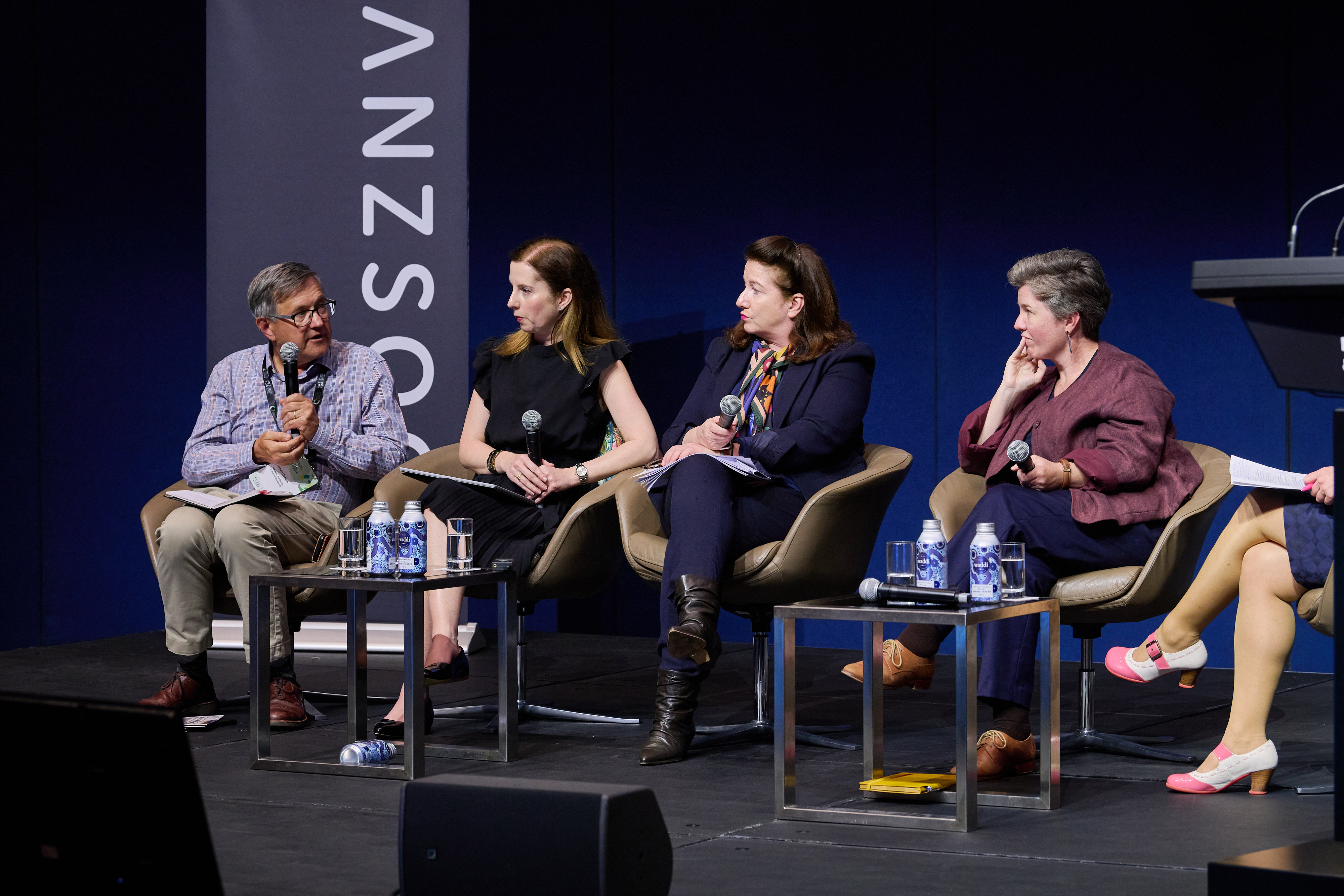
(L-R) RegNet's George Mason, Rose Webb, Art Cotterell, Veronica Taylor and Simon Corden. Photo credit: NRCoP and ANZSOG
From stewardship to regulating emerging technologies, RegNet academics and PhD scholars brought fresh perspectives to the National Regulators Community of Practice (NRCoP) 2025 National Conference, held on 27–28 August at the Brisbane Convention and Exhibition Centre in Meanjin, helping to shape the future of regulatory thinking and practice.
This year’s theme, Regulation 2025 to 2050: Disruption, Change and Continuity, brought together over 600 regulatory practitioners and academics to explore new regulatory designs and approaches for adapting to disruption and change in an evolving and increasingly complex regulatory environment, where regulatory reform is back in the national spotlight. Delivered in-person, with livestream options for selected sessions, the event featured an inspiring mix of plenaries, interactive panels and networking opportunities.
Participants were invited to consider wide-ranging questions such as: How can regulators build trust and cooperation to achieve better outcomes in a complex world? What does AI hold for the future of regulation? And, how to navigate turbulent headwinds, with the global and domestic push for regulatory reform to boost efficiency and productivity?
Leading and learning: RegNet in discussion with experts
Professor Veronica Taylor and Art Cotterell, together with PhD scholars Rose Webb, Simon Corden and George Mason, shared insights across a range of panels and sessions.
For the plenary Bridging Policy and Practice: What do Regulatory Stewardship and Better Regulation Mean in Practice?, Professor Veronica Taylor shared insights and facilitated a thought-provoking discussion on how different agencies and jurisdictions approach “stewardship” and what “better regulation” means in practice, joined by Gráinne Moss, Chief Executive of the Ministry for Regulation/Te Manatū Waeture, Aotearoa New Zealand; Kate O’Rourke, Commissioner at the Australian Securities and Investments Commission (ASIC); Kelly Wood, Assistant Secretary, Regulatory Foundations, Australian Government Department of Finance; and Dr Karen Hooper, Queensland Productivity Commissioner.
RegNet is fortunate that two of our current PhD scholars, Rose Webb and Simon Corden, are former chairs of the National Committee of the NRCoP.
Rose returned to the main stage to facilitate the panel When Things Go Wrong – Is it Regulator “Failure” or Unreasonable Expectations?. Following a short introduction from former ASIC Chair James Shipton, the session became the first-ever live recording of the popular podcast The Westminster Tradition by Danielle Elston, Caroline Croser-Barlow and Alison Lloydd-Wright. The episode is now available on all major streaming platforms.
Simon joined the panel Regulating in a Changing Climate, where he spoke about the challenges of ensuring consumers are protected as they engage with emerging clean energy markets.
Art facilitated a panel on the Regulating New Domains: Space, joined by local and global leaders. Reflecting on the session, Art noted:
“Space is not a “new” domain, but its use cases and the actors – from public to private – have become increasingly complex. While regulation exists, there are clear gaps. Along with these regulatory challenges, we must also remember that space raises pressing ethical questions: whose voices and perspectives shape the way we regulate it, and how do we regulate in a manner that is inclusive and innovative? We were fortunate to hear from Professor Valmaine Toki, from the University of Waikato in Aotearoa New Zealand, a foremost thinker on an Indigenous right to space and celestial bodies to protect millennia long relationships.
Christopher de Luis, General Manager at the Office of the Space Regulator in the Australian Space Agency, also joined us and spoke about what a space regulator actually “regulates” and overseeing a growing industry. Meanwhile, Professor Christopher Newman, joining virtually from Northumbria University, spoke to the ‘space data deficit’ as a barrier to effective national regulation of space activity in the absence of an international agreement – and the risks this poses for preventing in-orbit collisions, among other challenges.
Ultimately, space affects us all, whether we realise it or not, and this panel was an opportunity to reflect on the ongoing need for international cooperation to address these challenges collectively, and a regulatory approach that is inclusive and innovative, for the benefit of all”.
PhD scholars sharing their research
Rose and Simon both presented posters about their PhD research in the conference display, attracting interest and thoughtful comments from many participants. Simon’s poster, Do reviews of regulators work and why?, introduced his upcoming research project and invited participants to express interest in contributing once ethics approval is in place. His study will involve interviews with reviewers, regulators, policymakers and stakeholders to explore how and why reviews of regulators are conducted, and what can be learned from them.
Meanwhile, Rose shared a poster on Regulating in the Australian Federation, which generated valuable discussion about federal approaches to regulation, including on harmonisation.
Connecting with The Professional Regulator community
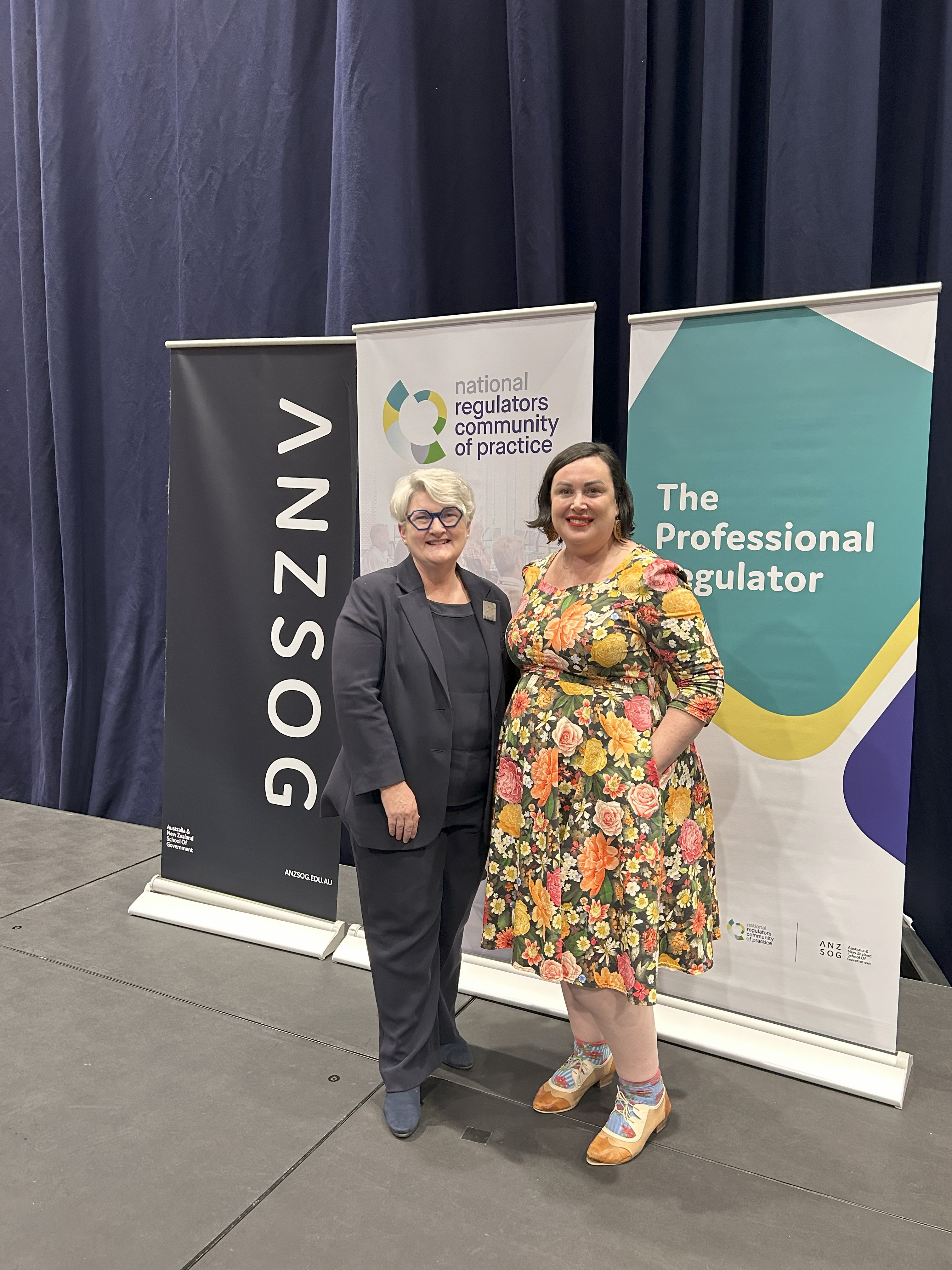
Lastly, the conference provided an opportunity for alumni and prospective students of The Professional Regulator – a professional development program designed by regulators for regulators – to connect. Delivered in partnership between RegNet and NRCoP, the program offers a common foundation in contemporary regulatory practice that builds professionalism, capacity and opportunities for networking across jurisdictions.
Adam Slater, Professor Taylor and Art were on hand to speak with participants about the course, a six-module, self-paced online program that equips regulators from any sphere or jurisdiction with the knowledge and skills to meet today’s regulatory challenges.
Photo credits: NRCoP and ANZSOG